
The Botanical History of Echinopsis pachanoi
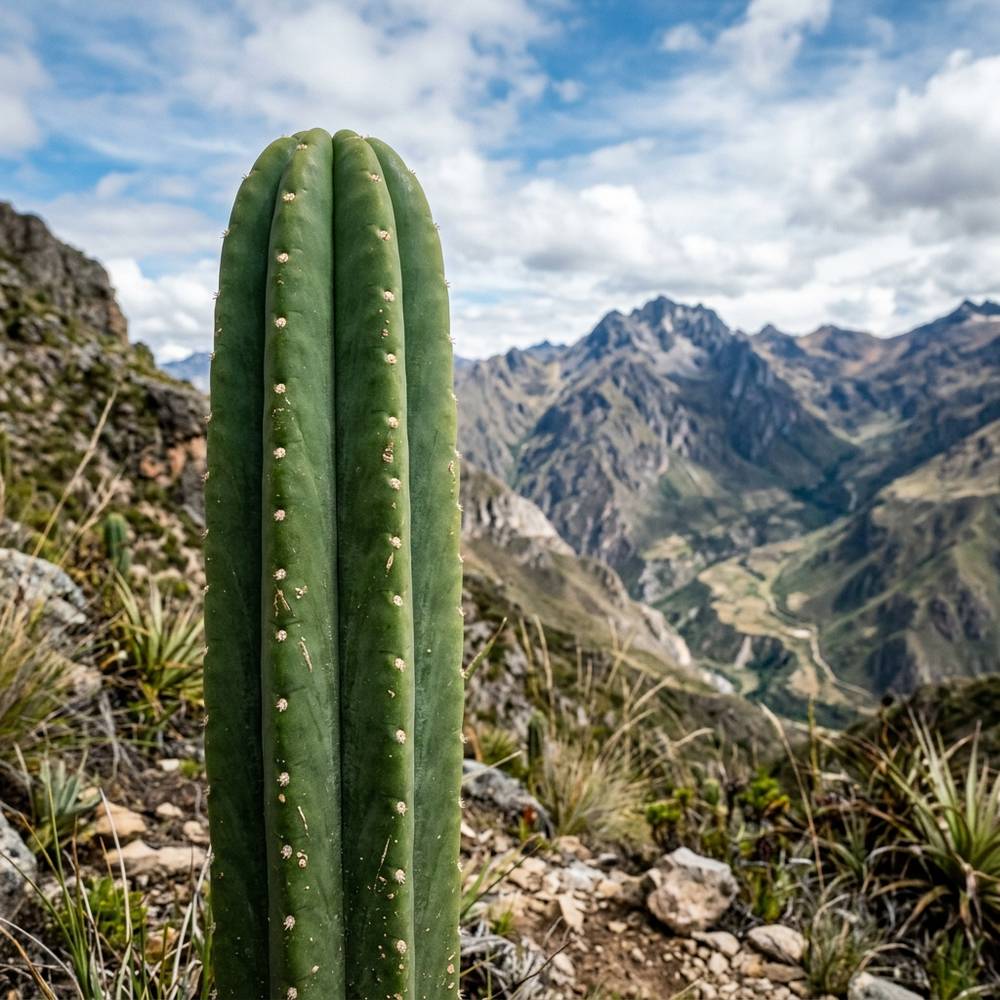
The cactus Echinopsis pachanoi (historically classified as Trichocereus pachanoi), known colloquially as San Pedro, is one of the most culturally significant plants native to the Andean mountain ranges of Peru, Ecuador, and Bolivia. Growing at elevations between 2,000 and 3,000 meters above sea level, this columnar species is distinguished by its deep green hue, rounded ribs, and nighttime blooming patterns.
Archaeological Discoveries in Chavín de Huántar
Archaeological evidence suggests that the relationship between Andean human populations and Echinopsis pachanoi spans over 3,000 years. The most famous depiction of the plant is found at the temple complex of Chavín de Huántar, located in the central Andes of Peru, dating back to approximately 1200–200 BC.
On the stone carvings of the temple’s circular plaza, figures of mythological therianthropes (half-human, half-jaguar priests) are shown carrying stalks of the San Pedro cactus. The plant served as a symbol of power, transitional states, and spiritual connection. The Chavín civilization utilized the columnar cactus as a central icon of their cosmos, carving its form onto tablets and pottery.
Taxonomy and Morphological Characteristics
Described scientifically in the early 20th century, Echinopsis pachanoi is characterized by:
- Growth Habit: Multi-stemmed, upright columnar clusters reaching up to 6 meters in height.
- Ribs: Usually 6 to 8 prominent, rounded ribs with small V-shaped impressions above the areoles.
- Areoles and Spines: Small, white or gray felted areoles that are often spineless or feature 3 to 7 short, light yellow-to-brown spines in young stalks.
- Flowers: Large, funnel-shaped white flowers measuring up to 22 cm in diameter that open at night and emit a strong, sweet fragrance.
Understanding the history of Echinopsis pachanoi highlights its role not just as a plant, but as a living archaeological artifact that has shaped the artistic, spiritual, and agricultural landscape of the high Andes for millennia.